
When the IRS issues a wage garnishment, it can feel overwhelming. Having part of your paycheck withheld each month makes it harder to keep up with daily expenses, bills, and family needs. The good news? There are proven ways to stop or reduce IRS wage garnishment and get back on track financially. This guide explains everything you need to know about IRS wage garnishment, your rights, and how to get professional help.
What Is IRS Wage Garnishment?
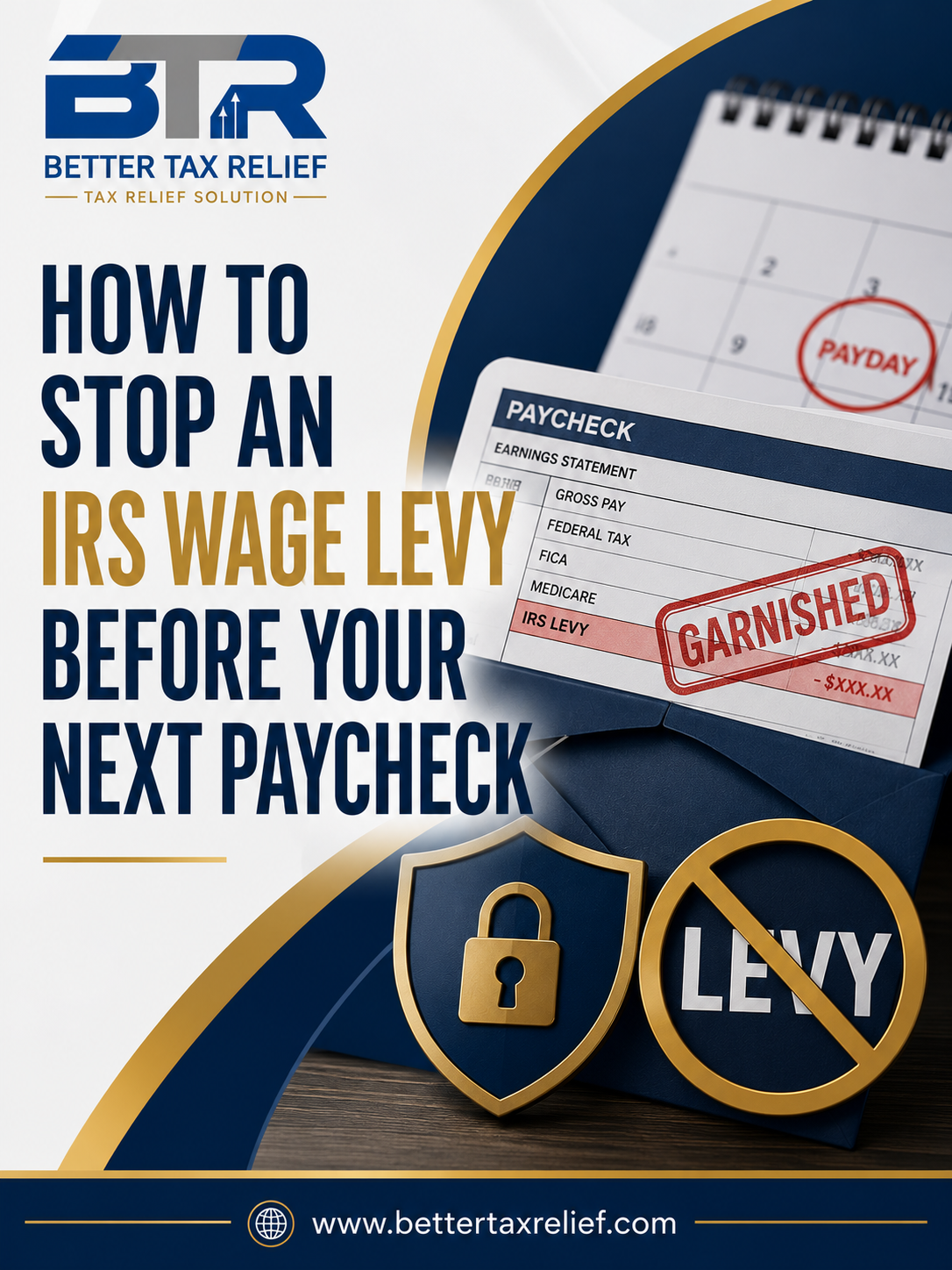
An IRS wage garnishment (also known as a wage levy) is when the IRS legally requires your employer to withhold a portion of your paycheck and send it directly to the IRS. Unlike other creditors, the IRS doesn’t need a court order to garnish wages—they can act after sending notices and demands for payment.
Why Does the IRS Garnish Wages?
The IRS may garnish wages if:
You have unpaid back taxes.
You ignored multiple IRS notices.
You didn’t set up a payment plan or make arrangements.
Before garnishment starts, the IRS typically sends:
A Notice and Demand for Payment.
A Final Notice of Intent to Levy and Notice of Your Right to a Hearing.
How Much Can the IRS Garnish from Your Paycheck?
Unlike regular creditors who must follow state limits, the IRS uses its own formula based on your filing status, dependents, and income. In many cases, the IRS can take a significant portion of your paycheck, leaving you with only the exempt amount needed for basic living expenses.
How to Stop IRS Wage Garnishment
If your wages are being garnished, you still have options to stop or reduce IRS wage garnishment:
1. Set Up an IRS Payment Plan
A monthly installment agreement lets you pay back taxes over time. Once approved, the IRS releases the garnishment.
2. Submit an Offer in Compromise (OIC)
If you can’t pay the full amount, you may settle your tax debt for less than you owe through an OIC.
3. Request Currently Not Collectible (CNC) Status
If you prove financial hardship, the IRS may pause collections until your situation improves.
4. File for Innocent Spouse Relief
If your tax debt is due to a spouse or ex-spouse’s error, you may qualify for relief.
5. Work with a Tax Professional
Tax resolution experts can negotiate directly with the IRS, often stopping wage garnishments faster.
Why Get Professional IRS Wage Garnishment Help?
Handling the IRS alone can be intimidating. A tax resolution professional understands IRS rules and can:
File appeals and stop garnishments.
Negotiate affordable payment terms.
Protect your paycheck and assets.
Help you avoid future tax problems.
Take Action Today
The longer you wait, the harder it becomes to recover financially. If the IRS is garnishing your wages, don’t ignore it. Explore options like installment agreements, offers in compromise, or professional tax relief services. Getting IRS wage garnishment help now can protect your income and give you peace of mind.





Write a comment ...